

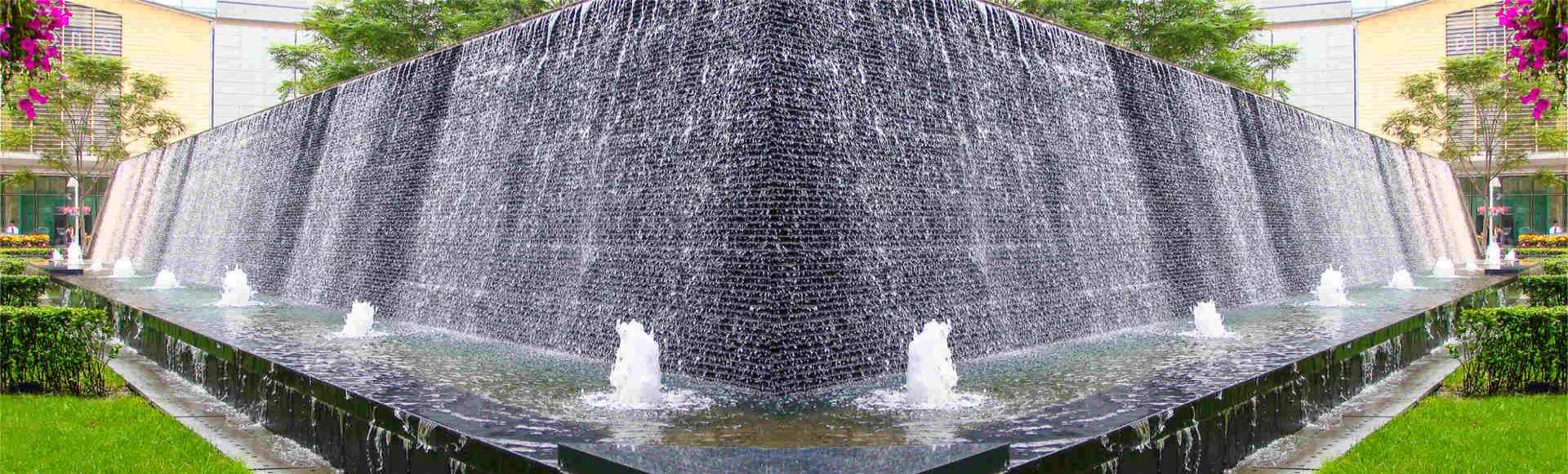

With the diversification of modern architectural design, water curtain walls are widely used as a unique architectural element in public spaces and residential environments. It not only adds dynamic beauty to buildings, but also has practical functions such as adjusting indoor and outdoor environments and reducing noise. However, when designing water curtain walls, architects and homeowners often face a choice: whether to adopt a sloping design or a vertical design? This article will delve into the advantages and disadvantages of using sloping and vertical designs for water curtain walls, as well as their suitability in different application scenarios, to help readers make informed decisions.
1、 Overview of Water Curtain Wall
Water curtain wall is a device that uses circulating water flow to cover the wall to form a layer of water curtain. It can be decorative or have practical functions such as insulation and sound insulation. According to the direction of water flow and the shape of the wall, water curtain walls can be divided into two basic types: sloping and vertical.
2、 Characteristics of Slope Water Curtain Wall
1. Visual effect: Due to its inclined nature, the sloping water curtain wall allows water flow to slide down from top to bottom under the influence of gravity, forming a flowing water curtain that gives people a soft and dynamic visual experience.
2. Spatial adaptability: Slope water curtain walls are suitable for installation in open or semi open spaces, which can effectively guide the flow of rainwater and reduce the impact on the interior of buildings.
3. Maintain cleanliness: As the water curtain flows along the slope, natural gravity helps to carry away sediment and impurities, thereby reducing the difficulty and frequency of maintenance.
4. Structural requirements: The sloping water curtain wall needs to have stable structural support, as the inclined design will generate certain lateral pressure on the wall.
3、 Characteristics of Vertical Water Curtain Wall
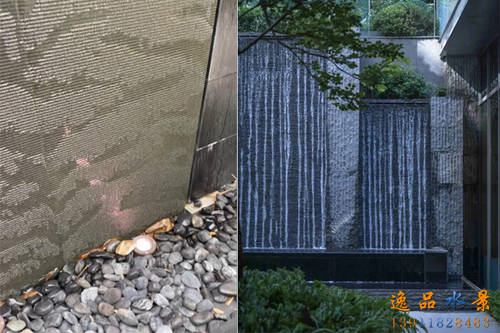
1. Visual effect: The vertical water curtain wall creates a spectacular waterfall like scene with water flowing vertically, giving people a fresh and natural visual impact.
2. Spatial adaptability: Vertical water curtain walls are suitable for installation in various indoor and outdoor environments, especially in urban environments with limited space. They can save ground space and improve space utilization.
3. Maintenance and cleaning: The water flow of the vertical water curtain wall is directly downward, which can easily form a water accumulation area at the bottom and may require more frequent cleaning and maintenance work.
4. Structural requirements: Vertical water curtain walls have relatively low structural requirements because they do not generate additional lateral pressure.
4、 Key factors in design selection
1. Site conditions: The size, shape, and surrounding environment of the site are important factors determining the design of water curtain walls. Slope design is suitable for wide open spaces, while vertical design is more suitable for narrow or enclosed spaces.
2. Functional requirements: If the main purpose of the water curtain wall is to create visual effects, it can be chosen according to personal preferences and design concepts; If practicality is considered, such as insulation, sound insulation, etc., it needs to be determined based on specific functions.
3. Maintenance cost: Considering the convenience and cost of long-term maintenance, slope design may be more cost-effective.
4. Safety: Vertical water curtain walls may cause splashing problems for pedestrians below, so caution should be taken in densely populated areas.
5、 Case analysis
In order to more intuitively demonstrate the application effect of slopes and vertical water curtain walls, this article will list several typical cases for analysis. By comparing the actual operation of different design schemes, we can have a clearer understanding of their respective advantages and limitations.
6、 Conclusion and Suggestions
In summary, whether using a sloping design or a vertical design, water curtain walls have their unique charm and applicable scenarios. Designers should comprehensively consider factors such as site conditions, functional requirements, maintenance costs, and safety when making choices. For occasions that pursue visual dynamism and ease of maintenance, sloping water curtain walls may be a better choice; For situations where space is limited and visual impact is pursued, vertical water curtain walls may be more suitable. Ultimately, the choice of design should be based on comprehensive evaluation and careful planning to ensure the perfect combination of aesthetics, functionality, and economy of the water curtain wall.
Summary: As an innovative element of modern architecture, water curtain walls not only enrich the appearance of buildings, but also enhance their functional performance. When choosing a slope or vertical water curtain wall, designers and homeowners need to weigh multiple factors and make the most suitable decision for their own needs. Through the analysis in this article, we hope to provide valuable reference and inspiration for readers in choosing water curtain wall design.
 Hot news
  Contact Us
WhatsAPP:+86 13911828483
Phone:+86 13911828483
Email:we @ i8c.cc
Address:Beijing, China


